
There are seven types of dysarthria, each with their own causes and features (see below). Dysarthria is motor speech disorder caused by damage to the central and/or peripheral nervous system. Each type of dysarthria results in a different pattern of impairment in the muscle control of the speech mechanism.
People with dysarthria may have problems with respiration (breathing), phonation (voicing), articulation (speech), prosody (patterns of stress and intonation) and resonance (e.g. nasality). Treatment usually focuses on managing these problems, with priorities set collaboratively by the client, his or her family members, and the therapist.
Features of the seven kinds of dysarthria can be outlined as follows:
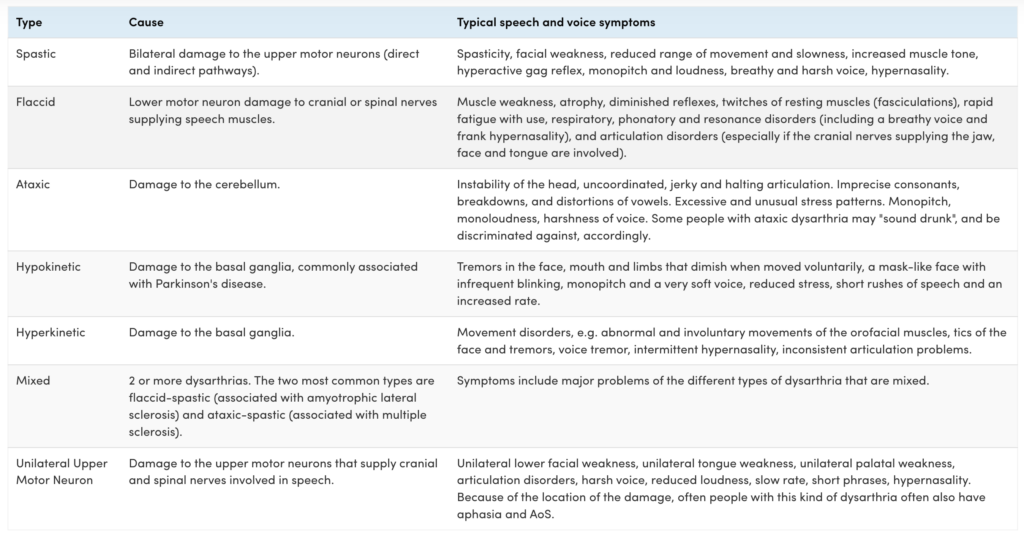
In practice, the correct diagnosis and treatment of dysarthria is a lot more complicated than the table above suggests.
Hi there, I’m David Kinnane.
Principal Speech Pathologist, Banter Speech & Language
Our talented team of certified practising speech pathologists provide unhurried, personalised and evidence-based speech pathology care to children and adults in the Inner West of Sydney and beyond, both in our clinic and via telehealth.
Leave a Reply