


(L305) Blanks 3: What is it? Semantic feature analysis – describing objects by key attributes
$5.99 including GST
With a scripted introduction, a colourful scaffold, and 30 examples, this 43-page no-preparation pack is designed to give students plenty of structured practice describing common objects. Once completed, students can use the scaffold to describe any object, including curriculum specific nouns.
Description
In the early years of school, we want students to learn to look beyond what they see and to rework their experiences using language. One way to help children to this is to teach them to describe the information they see by reference to key attributes – the qualities or features regarded as characteristic or as inherent parts – of the things around them.
Semantic feature analysis – describing objects by key attributes – is an evidence-based strategy to learn new vocabulary and word meanings. It can deepen students’ understanding of words they already know. The strategy can also help children with word-finding or other language or learning difficulties, e.g. by giving them a way of describing what they mean when they can’t find the word.
This no-preparation pack is designed to help students of all abilities to learn the strategy of semantic feature analysis. To make it accessible to all students, we have chosen easily pictured objects from Odgen’s high frequency, functional Basic English Word List.
We have selected attributes that we have found clinically to be of the greatest use in describing, defining and understanding common objects, namely:
-
- function (what you do with it, or what it does);
- location (where you find it);
- object parts (to help students to look closely at objects);
- colour;
- size; and
- category/group (to stimulate semantic knowledge and associations between objects).
With a scripted introduction, a colourful scaffold, and 30 examples, this 43-page pack is designed to give students plenty of structured practice describing common objects. Once completed, students can use the scaffold to describe any object, including curriculum specific nouns.
For more information and free resources about vocabulary support and instruction, check out our article: How to help your school-age child learn new words: the nuts and bolts of how I actually do it therapy.

 (S129) Speech Fluency & Naturalness Practice for Students and Adults who Stutter: Volume 8 (Short Stories)
 (L511) Listen then Speak Spooky Edition: an oral language workout for students in Years 2-5
 (S125) Speech Fluency & Naturalness Practice-Readings for Students and Adults who Stutter: Volume 6 (Famous Essays)
 (L267) Can I...? Questions (Auditory bombardment)
 (L503) Listen then Speak 3: an oral language workout for students in Years 2-5
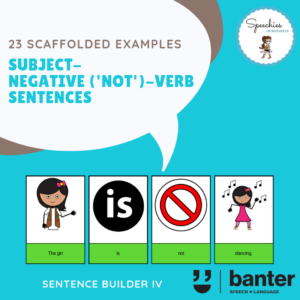
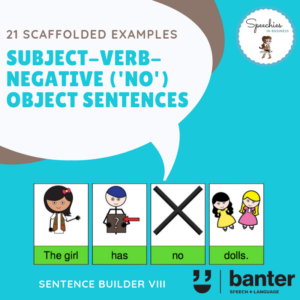 (L123) Subject Verb Negative ("No") Object (SVNegO) Sentences
 (L507) Listen then Speak 7: an oral language workout for students in Years 2-5
 (S115) Stuttering and fluency wellness snapshot for school-aged children who stutter
 Word Learner
 (S120) Speech Fluency & Naturalness Practice-Readings for Students who Stutter: Volume 1 (Nonsense Verses)
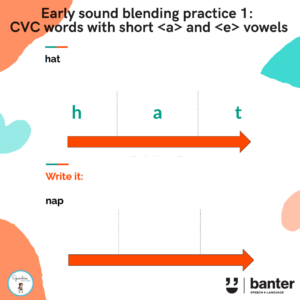 (R201) Early sound blending practice 1: CVC words with short a and e vowels
 (L161) Concepts in action: Slow (a level 1 movement concept)
 (L403) Theory of Mind: How does she think he is feeling? A Second-Order Theory of Mind Picture Resource
 (L509) Listen then Speak 9: an oral language workout for students in Years 2-5
 (L326) Christmas Season Language Comprehension Booster
 (L252) Sentence Maker: “Until” and “Unless”
 (L159) Concepts in action: Happy (a level 1 feelings concept)
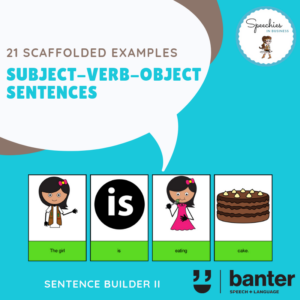 (L119) Subject-Verb-Object (SVO) Sentence Builders
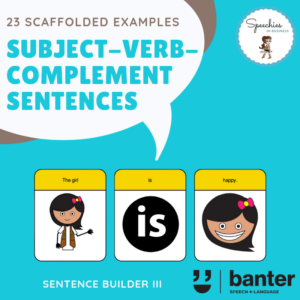
 (L129) Subject-Verb-Complement (Auditory Bombardment)
 (R602) High Frequency Prefixes for Reading and Writing: "Re-"
 (L414) Theory of Mind and Blank's Level 4 Questions Picture Resource
 (L306) "What is it"? Foundations: Objects in Familiar Environments
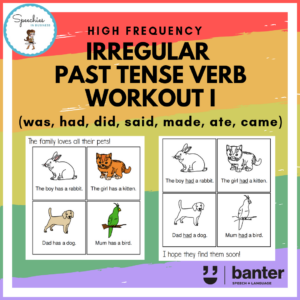 (L132) Verbs: Irregular past tense verb workout 1 (was, had, did, said, made, ate, came)
 (S118) Picture Description Resources for Stuttering Therapy (Volume 2)
 (L508) Listen then Speak 8: an oral language workout for students in Years 2-5
 (R515) Think, Then Write: Sentence Writing Bootcamp
 (R604) High Frequency Prefixes for Reading and Writing: "De-"
 (L504) Listen then Speak 4: an oral language workout for students in Years 2-5
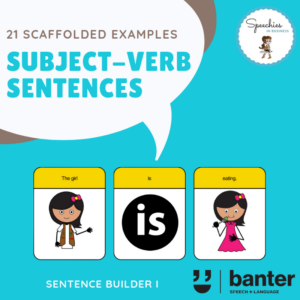
 (L111) Subject-Verb (-ing) (Auditory bombardment)
 (S122) Speech Fluency & Naturalness Practice-Readings for Students who Stutter: Volume 3 (Poems)
 Carrier Phrases for Speech, Language, Stuttering and Voice Therapy
