

(L213) How Questions Pack (No Prep)
$5.99 including GST
At around 42-48 months of age, typically developing children begin to understand “how” questions. But many people – including people learning English as a second language and people with communication disorders – struggle to understand “how” questions.
Of all the question words, “how” is one of the trickiest adverbs to understand and to use. That’s because we use “how” in at least three different ways:
- “How” can mean – “In what manner?”
- “How” can be used to ask questions about the condition of something or someone.
- “How” can be used to ask about the extent or degree of something.
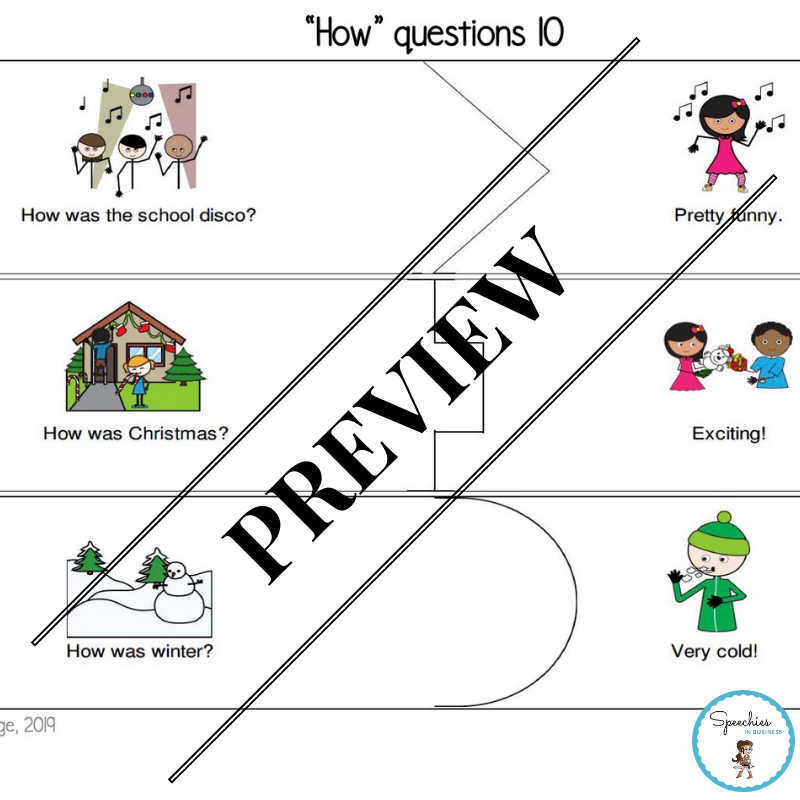
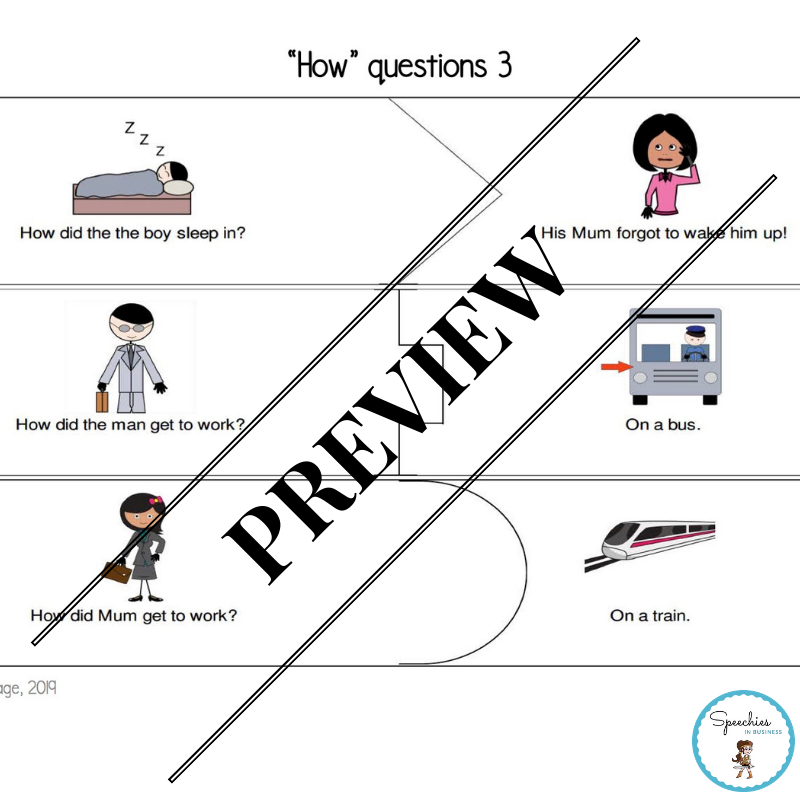
In this 18-page no-prep resource pack, we provide 42 scaffolded sentences to help people understand and to use “how” in questions.
Description
Why are “how” questions so hard to understand?
At around 42-48 months of age, typically developing children begin to understand “how” questions. But many people – including people learning English as a second language and people with communication disorders – struggle to understand “how” questions.
Of all the question words, “how” is one of the trickiest adverbs to understand and to use. That’s because we use “how” in at least three different ways:
(1) “How” can mean – “In what manner?”
How did Joss get the torch to work? He put batteries in it!
How did Harley learn to tie his shoes? By practising every day!
(2) “How” can be used to ask questions about the condition of something or someone
How is the girl feeling? Happy.
How was the chocolate cake? Yummy!
(3) “How” can be used to ask about the extent or degree of something
How old is Grandpa? More than sixty!
How nice was that ice cream? Really nice!
In this 18-page no-prep resource pack, we provide 42 scaffolded sentences to help people understand and to use “how” in questions.

Related products
-
-
-
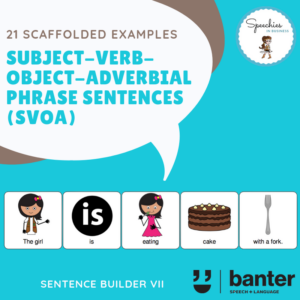
(L145) Subject-Verb-Object-Adverbial Phrase (SVOA) Sentence Builders
$5.99 including GST -
 (L313) Blanks 3 Bundle: Language Comprehension Booster - Verbal Reasoning Tasks
 (L302) Blanks 2 and 3 Dinosaurs Picture Resource
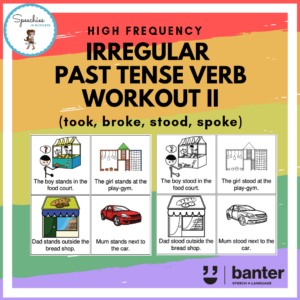 (L133) Verbs: Irregular Past Tense Verb Workout 2 (took, broke, stood, spoke)
 (L324) Blanks 3 and 4 Picture Resource
 (L502) Listen then Speak 2: an oral language workout for students in Years 2-5
 Word Learner
 (R601) High Frequency Prefixes for Reading and Writing: "Un-"
 (L129) Subject-Verb-Complement (Auditory Bombardment)
 (S128) Speech Fluency & Naturalness Practice for Students and Adults who Stutter: Volume 7 (Impromptu Speaking Discussion Topics)
 (R607) High Frequency Prefixes for Reading and Writing: "In-"
 (L126) Subject-Negative ('Don't')-Verb (SNegV Don't) Sentence Builders
 (L242) Conjunctions - When (Auditory Bombardment)
