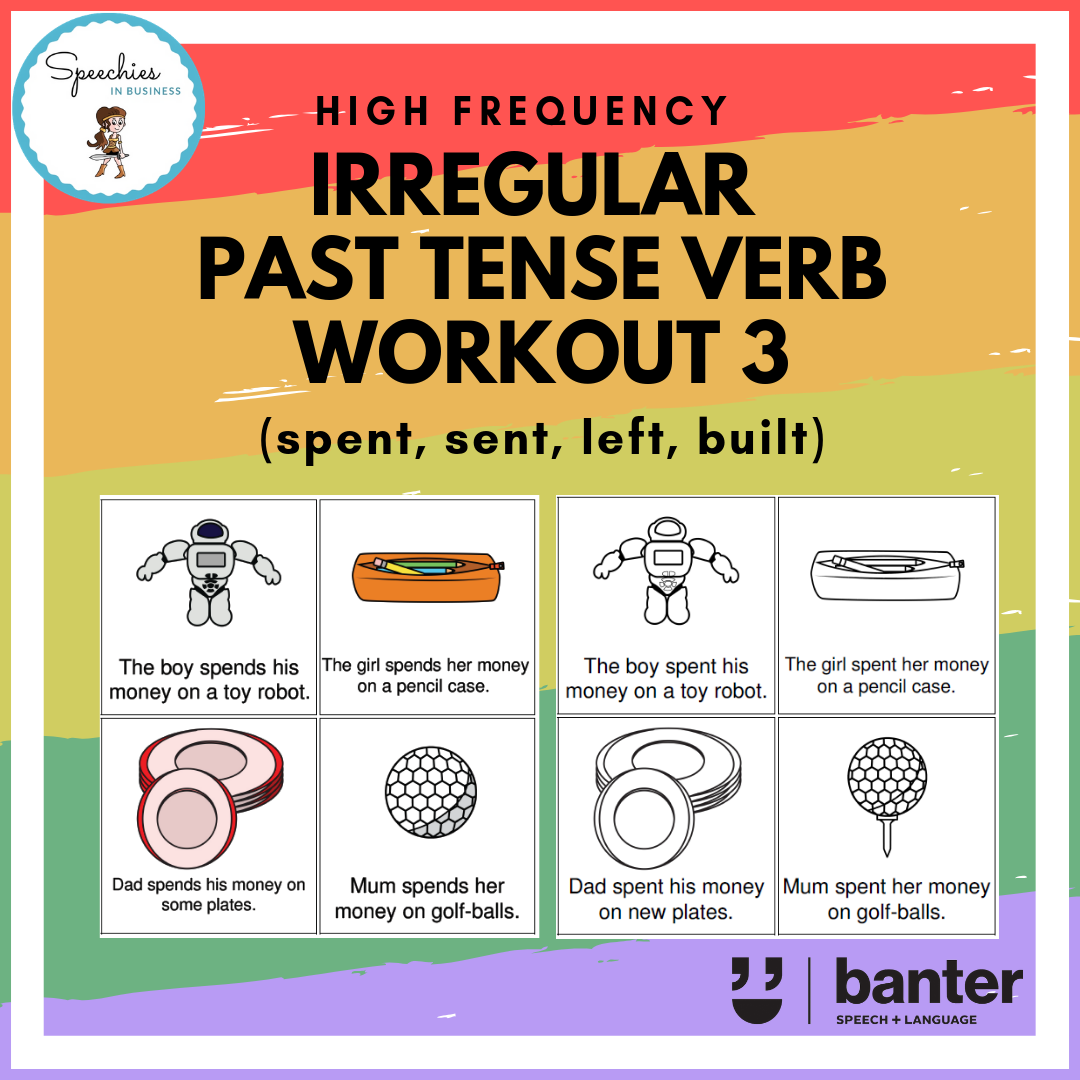
(L134) Verbs: Irregular Past Tense Verb Workout 3 (spent, sent, left, built)
$5.99 including GST
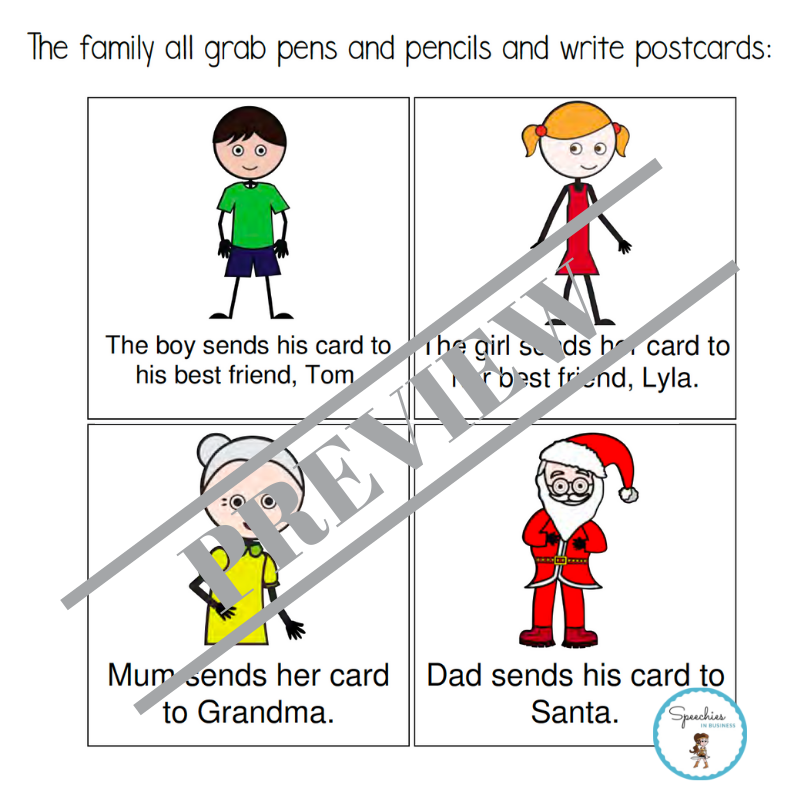
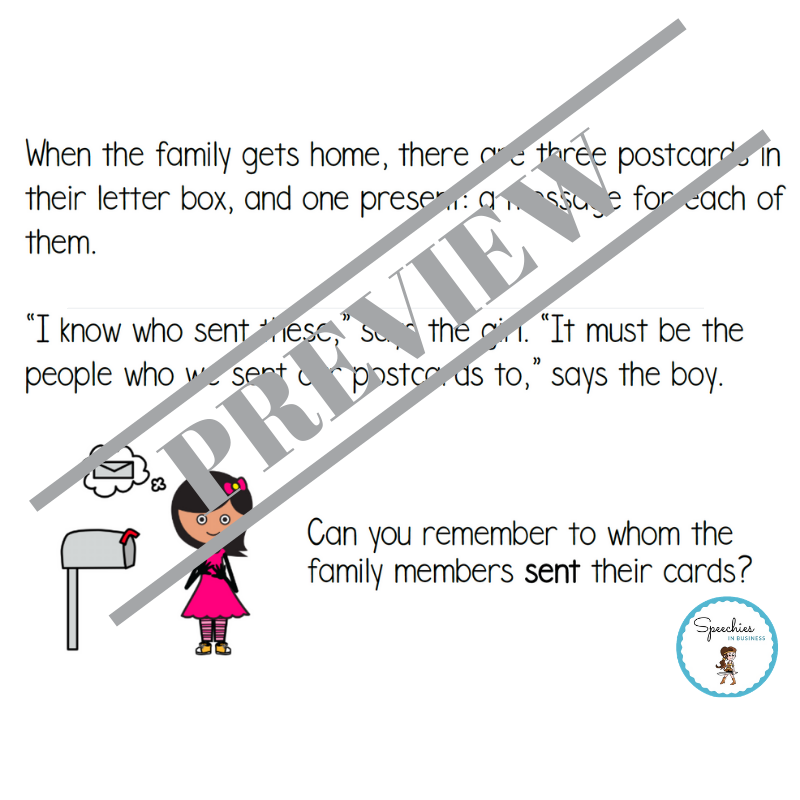
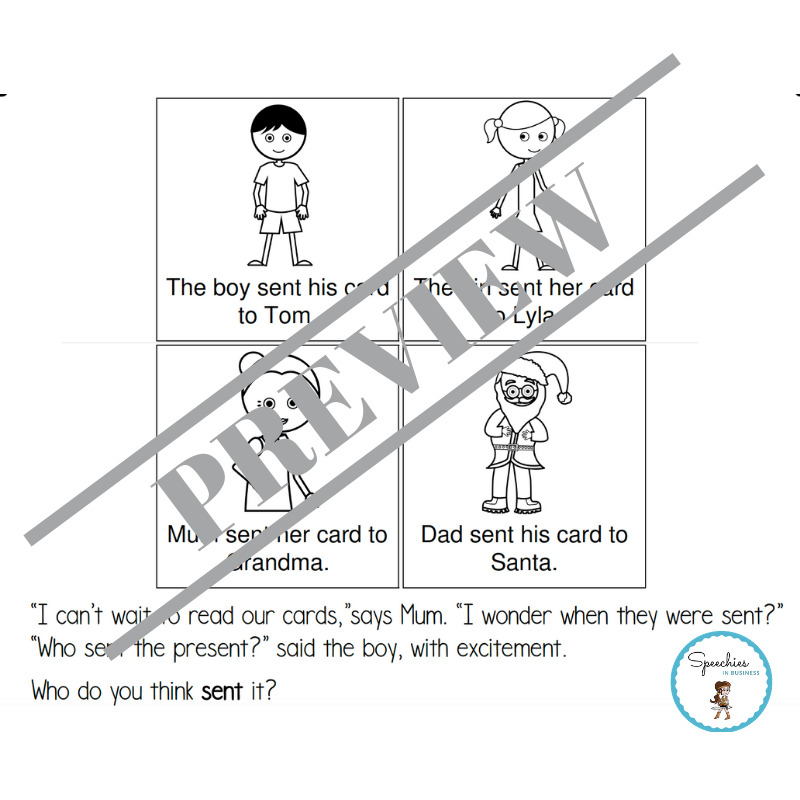
In this 35-page Pack 3, we cover four of the highest frequency verbs in English with irregular past tense forms: spent, sent, left, built. We tackle them one at a time, with “mini-stories” for each verb. We then put them all together for extra practice and revision.
Description
At around 30-36 months of age, typically developing children start to use irregular past tense verbs such as came, fell, broke, sat, and went in sentences. For many people – including people learning English as a second language and people with language disorders – learning irregular past tense verbs is a huge challenge.
Unfortunately, many of the highest frequency verbs in English have irregular past tense forms. To help people to learn irregular past tense verbs methodically, we’ve reviewed the New General Service List-Spoken (Brown & Culligan, 2013): a list containing 721 words providing up to 90% coverage for unscripted spoken English. We’ve extracted the 57 most frequent irregular verbs in spoken English, and then sorted them into 10 broad groups.
In this Pack 3, we cover four of the highest frequency verbs in English with irregular past tense forms. We tackle them one at a time, with “mini-stories” for each verb. We then put them all together for extra practice and revision. Here’s what we cover in this pack:
- spend/spent
- send/sent
- leave/left
- build/built
For more irregular past tense verb workouts, see our Pack 1 (was, had, did, said, made, ate, came) and Pack 2 (took, broke, stood, spoke), Pack 4: knew, drew, grew, threw and Pack 5: slept, went, meant.


 (R612) High Frequency Suffixes for Reading and Writing: "-ible"
 (R423) The Scarecrow and Bear Fair in the Land of Nowhere
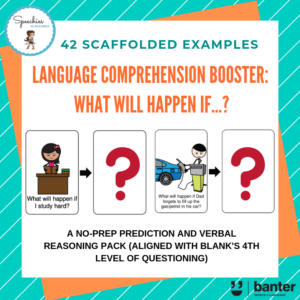 (L404) Blanks 4: Language comprehension booster: What will happen if...?
 (L267) Can I...? Questions (Auditory bombardment)
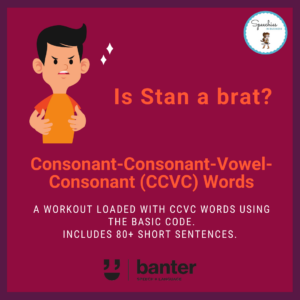 (R209) CCVC Words in Sentences: Is Stan a Brat?
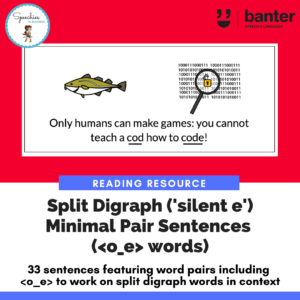 (R310) Reading Resource: Split Digraph ('silent e') Minimal Pair Sentences: o_e words
 (L242) Conjunctions - When (Auditory Bombardment)
 (L101) Barrier Activities - Basic English Core Vocabulary: Nouns 1
 (R305) Decoding Polysyllabic Words in Sentences: My Mother Is Impressive
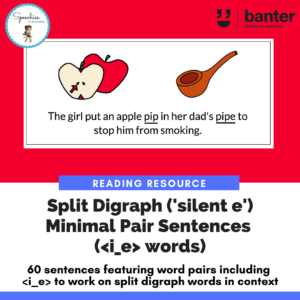 (R309) Reading Resource: Split Digraph ('silent e') Minimal Pair Sentences: i_e words
 Carrier Phrases for Speech, Language, Stuttering and Voice Therapy
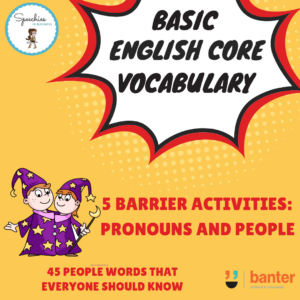 (L144) Barrier Activities - Basic English Core Vocabulary: Pronouns and People
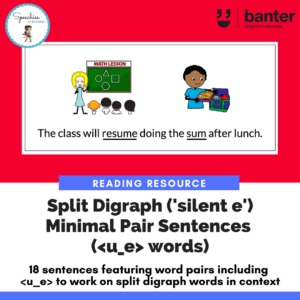 (R311) Reading Resource: Split Digraph ('silent e') Minimal Pair Sentences: u_e words
 Speech Therapy by Telehealth (Video Conferencing): Parent Guidelines
 (R210) Early sound blending practice 5: CVCC words - starting with a continuant
 (L264) The No Prep Grammar Builder: Uncontractible Copulas (“Who’s happy?” “She is!”)
 (L214) Following Directions Workout 1
 (L229) Conjunctions - Because (Auditory bombardment)
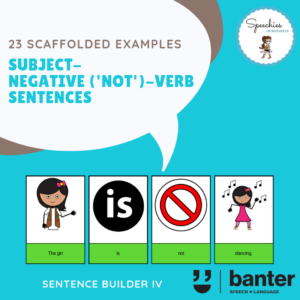 (L124) Subject-Negative ('not')-Verb (SNegV) Sentence Builders
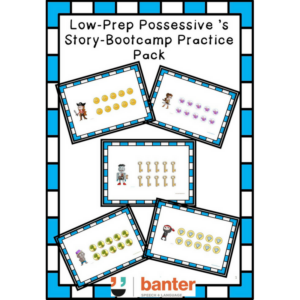 (L263) Low-Prep Possessive ’s Story-Bootcamp Practice Pack
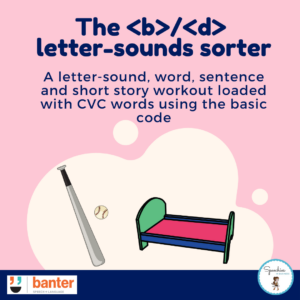 (R206) b/d letter-sounds sorter (a letter-sound, word, sentence and short story workout with CVC words)
 (R216) Early sound blending practice 6: CCVCC words - starting with a continuant
 (R507): Think Then Write Workbook 1: Simple Sentences
 The No-Prep Mumble-Buster: for children who mumble and mutter
 (A100) Sound Cards
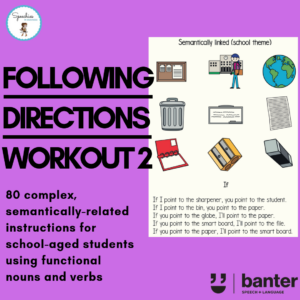 (L215) Following Directions Workout 2
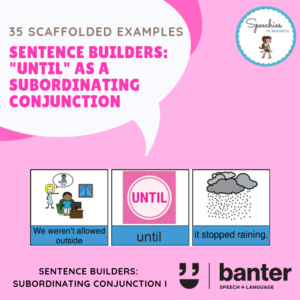 (L250) Sentence builders: "Until" as a Subordinating Conjunction
 (L120) Subject-Verb-Object (SVO) Sentence Builders Volume 2
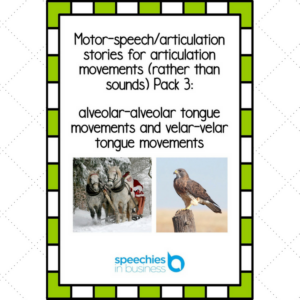 Motor-speech stories for articulation movements pack 3: alveolar-alveolar and velar-velar
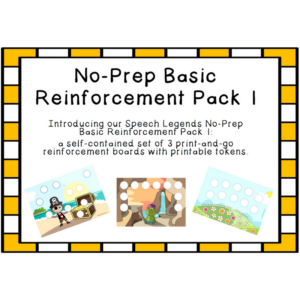 No-Prep Basic Reinforcement Pack I
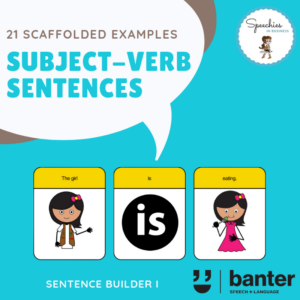 (L109) Subject-Verb (SV) Sentence Builders
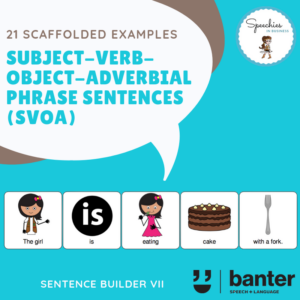 (L145) Subject-Verb-Object-Adverbial Phrase (SVOA) Sentence Builders
 (F513): Chief Shoshone and A Palatal Thriller: Palatal-Palatal Stories
 (F508) Zack the Zookeeper: An Alveolar-Velar Story