


(L425) I can help at home – let me tell you how (functional procedures and sequencing)
$6.99 including GST
This 29-page resource is designed to support children to explain procedures for everyday activities, using animated GIFs and a language scaffold to help children to express themselves.
The resource is suitable for oral and written procedures, with space for older students to write responses.
We also include a simple chore (reward) chart that parents and other caregivers can use to give positive feedback to children about how independent and helpful they are.
Description
This resource is designed to support children to explain procedures for everyday activities, using animated GIFs and a language scaffold to help children to express themselves. The resource is suitable for oral and written procedures, with space for older students to write responses.
We also include a simple chore (reward) chart that parents and other caregivers can use to give positive feedback to children about how independent and helpful they are.
Why procedures based on every day chores?
We want young children to be responsible, and to help others. We also want to increase their skills and independence.
Even young preschoolers can help around the house; and we should expect school-aged children to do so. Many children respond well to high expectations and lots of praise for having a go and contributing to family life.
Many young children – including many children with developmental language and learning disorders – have difficulties expressing themselves. One of the central insights of the participation model is that we can help children with communication disorders by increasing their activities – the things they do in different places – especially with everyday routines and functional activities that include planning (sequencing), decision-making, and social interactions.
You can read more about this model here: Beyond ‘fixing’: using the ‘F-Word Framework’ to support children with communication disorders and their families
You can play the GIFs by making a copy of the Google slides.
We hope you find this resource useful!

 (L229) Conjunctions - Because (Auditory bombardment)
 (L264) The No Prep Grammar Builder: Uncontractible Copulas (“Who’s happy?” “She is!”)
 (L112) Barrier Activities - Basic English Core Vocabulary: Verbs 1
 Carrier Phrases for Speech, Language, Stuttering and Voice Therapy
 (L121) Subject-Verb-Object (-ing) (Auditory Bombardment)
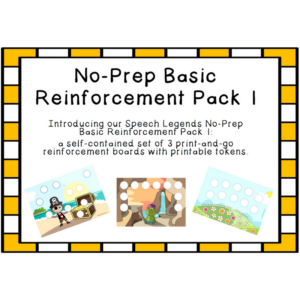 No-Prep Basic Reinforcement Pack I
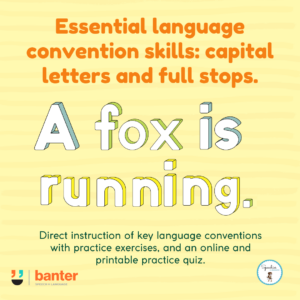 (R702) Essential Language Convention Skills (Capital Letters and Full Stops)
 (R414) The Zoo Druid
 (R810) Book Hacker: How to read a book to understand it quickly
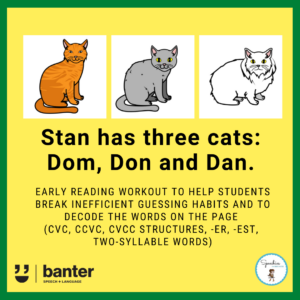 (R215) Early Reading Workout - Stan has three cats: Dom, Don and Dan (CVC, CVCC, CCVC)
 (L328) Concepts in action: Angry (a level 3 feelings concept)
 (R304) Decoding Polysyllabic Words in Sentences: My Dad Does Several Silly Things
 Word Learner
 (R517): Think then Write Workbook 3: Complex Sentences
 (R418) The Blue-Bruised Newt
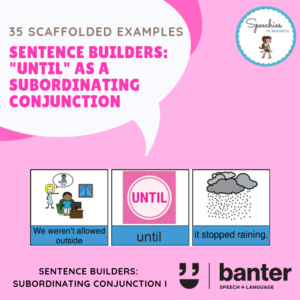 (L250) Sentence builders: "Until" as a Subordinating Conjunction
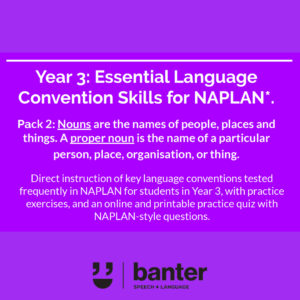 (R701) NAPLAN: Year 3 - Essential Language Convention Skills for NAPLAN (Nouns and Proper Nouns)
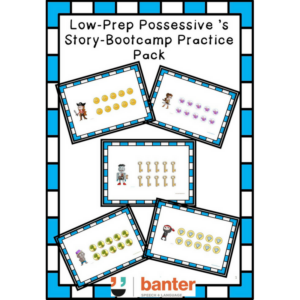 (L263) Low-Prep Possessive ’s Story-Bootcamp Practice Pack
 (R806) Think Then Write Workbook 5: Multi-Paragraph Information Report Writing Foundations
 (R419) The Shark Arcade
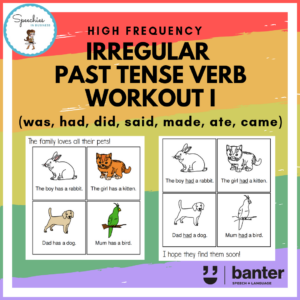 (L132) Verbs: Irregular past tense verb workout 1 (was, had, did, said, made, ate, came)
 (L282) Concepts in action: Long (a level 2 size concept)
 (R413) The Scatter-Slayer Adventures: Book 1 – Don’t Stay! Be Afraid!
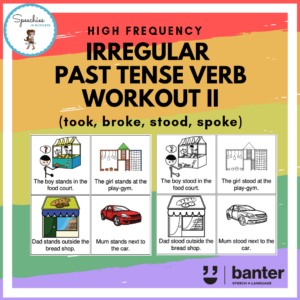 (L133) Verbs: Irregular Past Tense Verb Workout 2 (took, broke, stood, spoke)
 (R417) The Frightening Shy Child
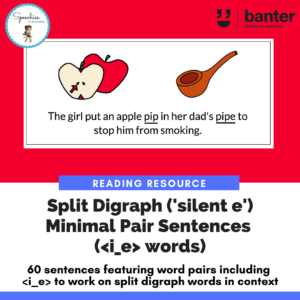 (R309) Reading Resource: Split Digraph ('silent e') Minimal Pair Sentences: i_e words
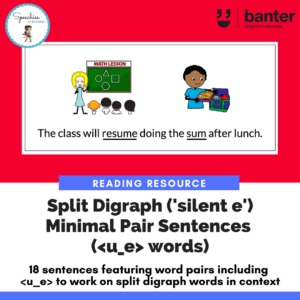 (R311) Reading Resource: Split Digraph ('silent e') Minimal Pair Sentences: u_e words
 (S125) Speech Fluency & Naturalness Practice-Readings for Students and Adults who Stutter: Volume 6 (Famous Essays)
 (R210) Early sound blending practice 5: CVCC words - starting with a continuant
 (L116) Barrier Activities - Basic English Core Vocabulary: Prepositions
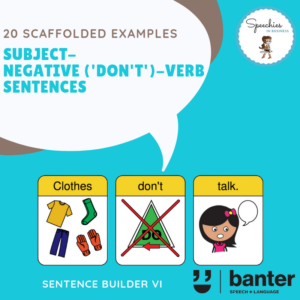 (L126) Subject-Negative ('Don't')-Verb (SNegV Don't) Sentence Builders
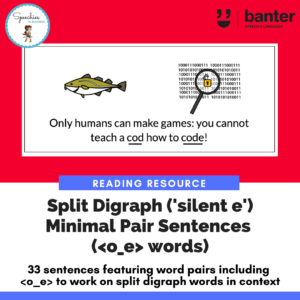 (R310) Reading Resource: Split Digraph ('silent e') Minimal Pair Sentences: o_e words
 (R305) Decoding Polysyllabic Words in Sentences: My Mother Is Impressive

Reviews
There are no reviews yet.