


(L104) Once upon a….who? A no-preparation resource to focus on the meaning of “who” questions in context
$6.99 including GST
This 33-page no-prep resource is designed to help children understand and use simple ‘who’ questions in context. Including people working in common occupations, and some well-known fairy tale characters.
This resource is designed to highlight the meaning of ‘who’ in short sentences.
Description
At around 24-30 months of age, typically developing children start to understand ‘who’ questions. But some don’t, including some children with language and other learning disorders, and people who are learning English as an additional language.
This 33-page no-prep resource is designed to help children understand and use simple ‘who’ questions in context. Including people working in common occupations, and some well-known fairy tale characters.
This resource is designed to highlight the meaning of “who” in short sentences.

Related products
-
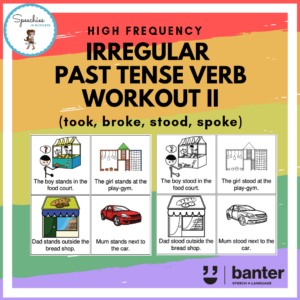
-
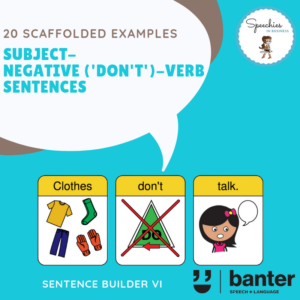
(L126) Subject-Negative (‘Don’t’)-Verb (SNegV Don’t) Sentence Builders
$5.99 including GST -
-

 (R413) The Scatter-Slayer Adventures: Book 1 – Don’t Stay! Be Afraid!
 (L242) Conjunctions - When (Auditory Bombardment)
 (L267) Can I...? Questions (Auditory bombardment)
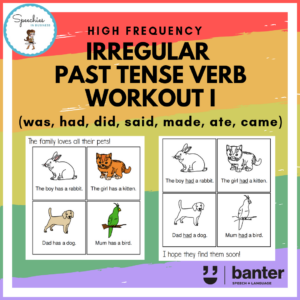 (L132) Verbs: Irregular past tense verb workout 1 (was, had, did, said, made, ate, came)
 (R306) Decoding Polysyllabic Words in Sentences: My Grandmother Is a Touch Unusual
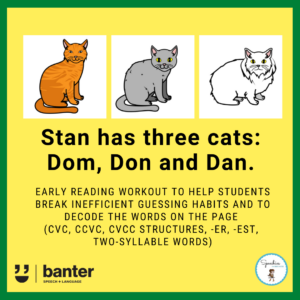 (R215) Early Reading Workout - Stan has three cats: Dom, Don and Dan (CVC, CVCC, CCVC)
 (R701) NAPLAN: Year 3 - Essential Language Convention Skills for NAPLAN (Nouns and Proper Nouns)
 (R305) Decoding Polysyllabic Words in Sentences: My Mother Is Impressive
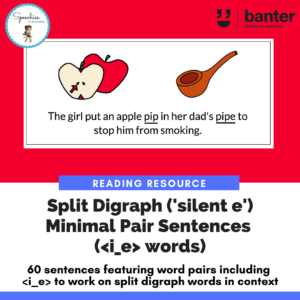 (R309) Reading Resource: Split Digraph ('silent e') Minimal Pair Sentences: i_e words
 (R415) Attack of the Eel Beast
 (R214) CVCC Words in Sentences: Wendy has zest!
 (R702) Essential Language Convention Skills (Capital Letters and Full Stops)
 (R311) Reading Resource: Split Digraph ('silent e') Minimal Pair Sentences: u_e words
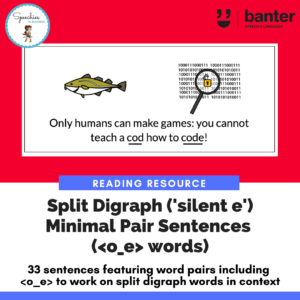 (R310) Reading Resource: Split Digraph ('silent e') Minimal Pair Sentences: o_e words
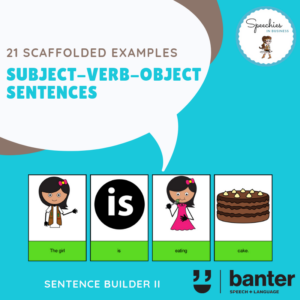 (L119) Subject-Verb-Object (SVO) Sentence Builders
