
Search Results for: light up language

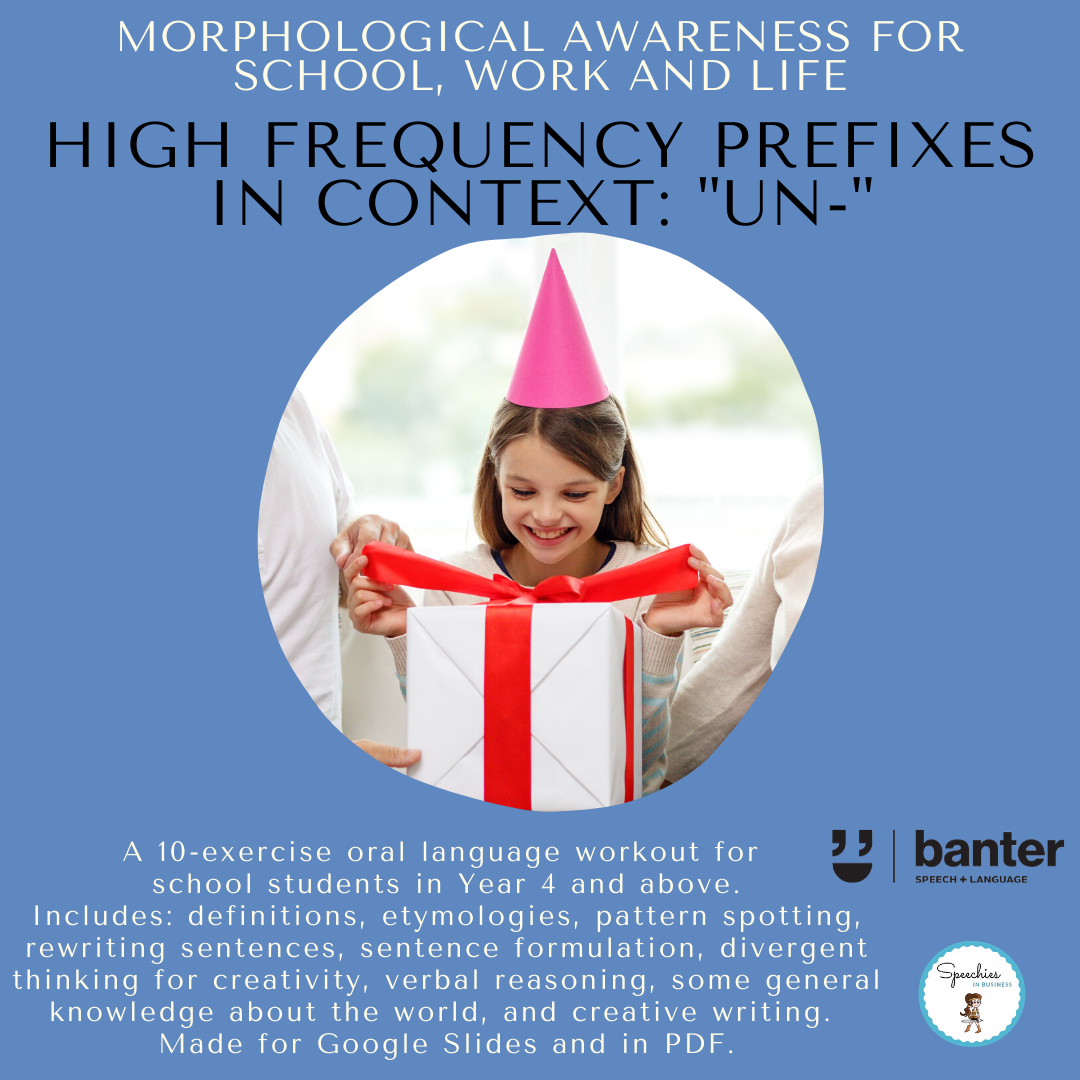
  • (R601) High Frequency Prefixes for Reading and Writing: “Un-“

    In this 19-page resource, we teach students that the prefix “un-” means “not” or the “opposite of”.

    It contains 10 activities designed to teach and consolidate this knowledge. Activities include:

      • teaching the definition and etymology of the prefix, “un-”, for comprehension and spelling;
      • a procedural word learning writing activity;
      • auditory bombardment -listening to  “un-” words in sentence context;
      • a highlighting activity: spotting the prefix in sentences;
      • a sentence rewriting exercise requiring students to replace words with a word using the “un-” prefix;
      • a sentence formulation exercise with semantic constraints: making original sentences using words with an “un-” prefix;
      • a divergent naming exercise: creative thinking using words with “un-” prefixes;
      • a general knowledge investigation;
      • a verbal reasoning/persuasive writing exercise: generating pros and cons for arguments including “un-” words; and
      • a story-making exercise with “un-” words.

    This resource is one of nine modules covering the most frequent prefixes uses in English. Fully scripted, the module is is suitable for one-to-one, small group and whole class instruction; and can be downloaded in PDF and Google Slides format.
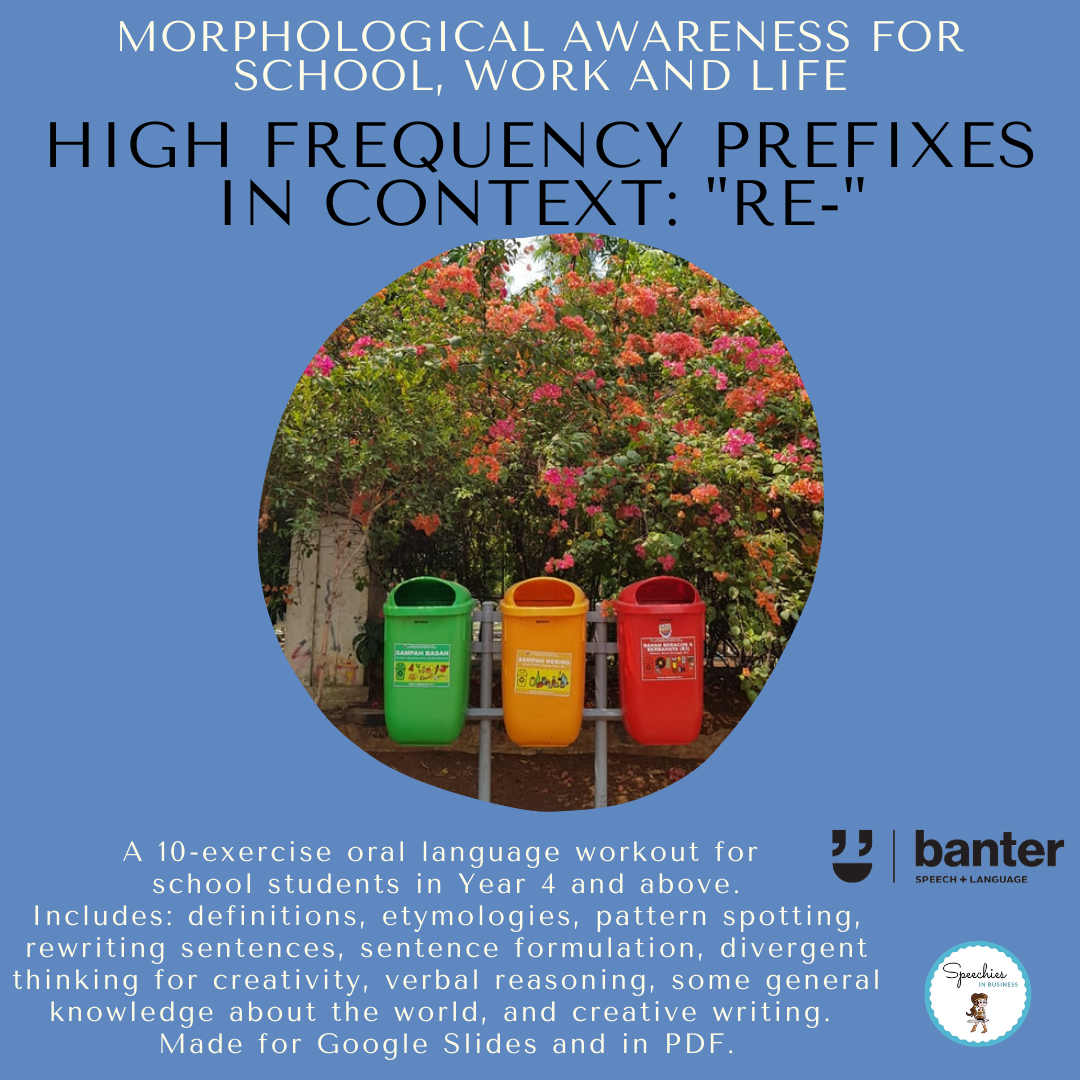
  • (R602) High Frequency Prefixes for Reading and Writing: “Re-“

    In this 19-page resource, we teach students that the prefix “re-” means “back”, “again” or “undoing”.

    It contains 10 activities designed to teach and consolidate this knowledge. Activities include:

    • teaching the definition and etymology of the prefix, “re-”, for comprehension and spelling;
    • a procedural word learning writing activity;
    • auditory bombardment – listening to “re-” words in sentence context;
    • a highlighting activity: spotting the prefix in sentences;
    • a sentence rewriting exercise requiring students to replace words with a word using the “re-” prefix;
    • a sentence formulation exercise with semantic constraints: making original sentences using words with an “re-” prefix;
    • a divergent naming exercise: creative thinking using words with “re-” prefixes;
    • a general knowledge investigation;
    • a verbal reasoning/persuasive writing exercise: generating pros and cons for arguments including “re-” words; and
    • a story-making exercise with “re-” words.

    This resource is one of nine modules covering the most frequent prefixes uses in English. Fully scripted, the module is is suitable for one-to-one, small group and whole class instruction; and can be downloaded in PDF and Google Slides format.
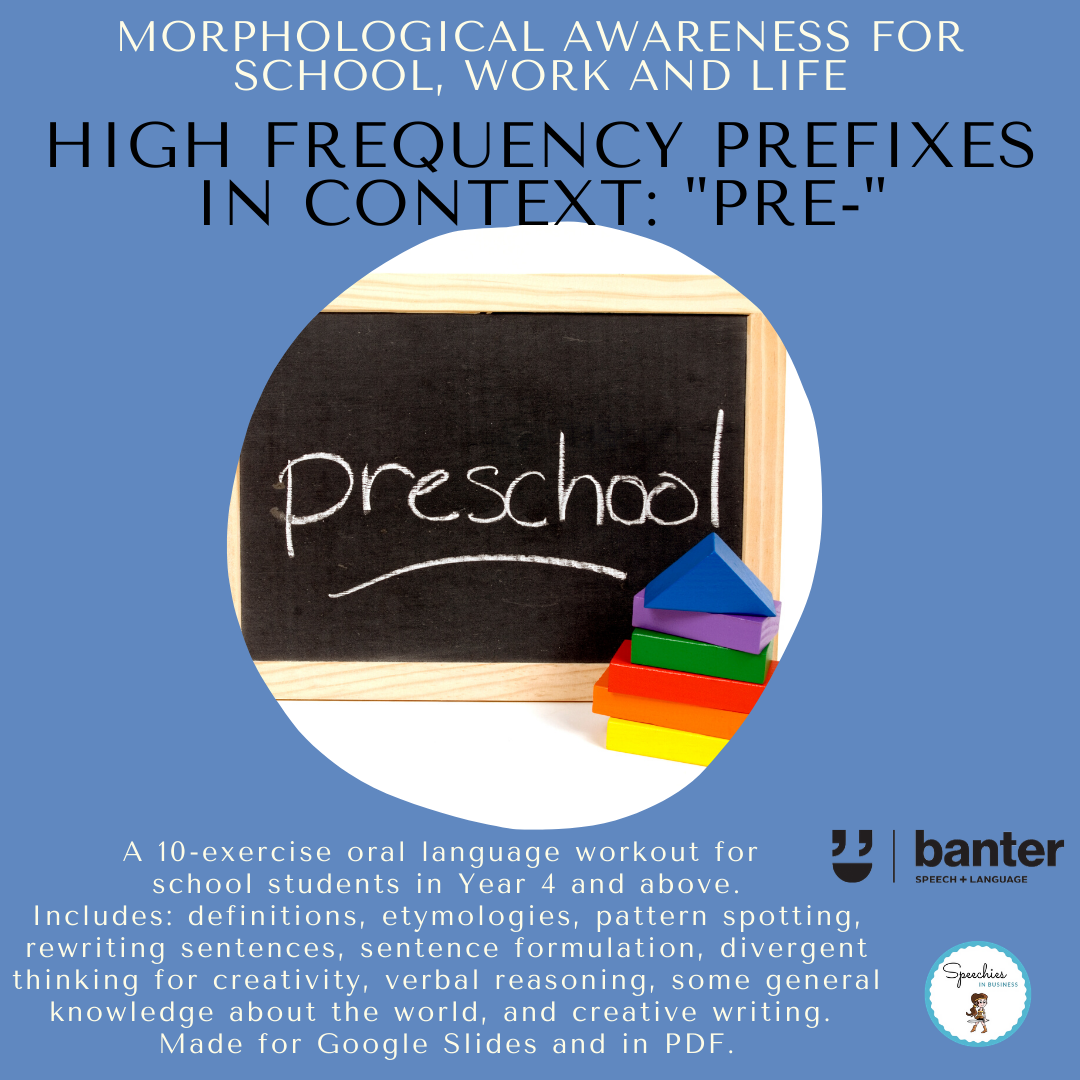
  • (R605) High Frequency Prefixes for Reading and Writing: “Pre-“

    In this 19-page resource, we teach students that the prefix “pre-” means “before” or “in front of”.

    It contains 10 activities designed to teach and consolidate this knowledge. Activities include:

    • teaching the definition and etymology of the prefix, “pre-”, for comprehension and spelling;
    • a procedural word learning writing activity;
    • auditory bombardment – listening to “pre-” words in sentence context;
    • a highlighting activity: spotting the prefix in sentences;
    • a sentence rewriting exercise requiring students to replace words with a word using the “pre-” prefix;
    • a sentence formulation exercise with semantic constraints: making original sentences using words with an “pre-” prefix;
    • a divergent naming exercise: creative thinking using words with “pre-” prefixes;
    • a general knowledge investigation;
    • a verbal reasoning/persuasive writing exercise: generating pros and cons for arguments including “pre-” words; and
    • a story-making exercise with “pre-” words.

    This resource is one of nine modules covering the most frequent prefixes uses in English. Fully scripted, the module is is suitable for one-to-one, small group and whole class instruction; and can be downloaded in PDF and Google Slides format.
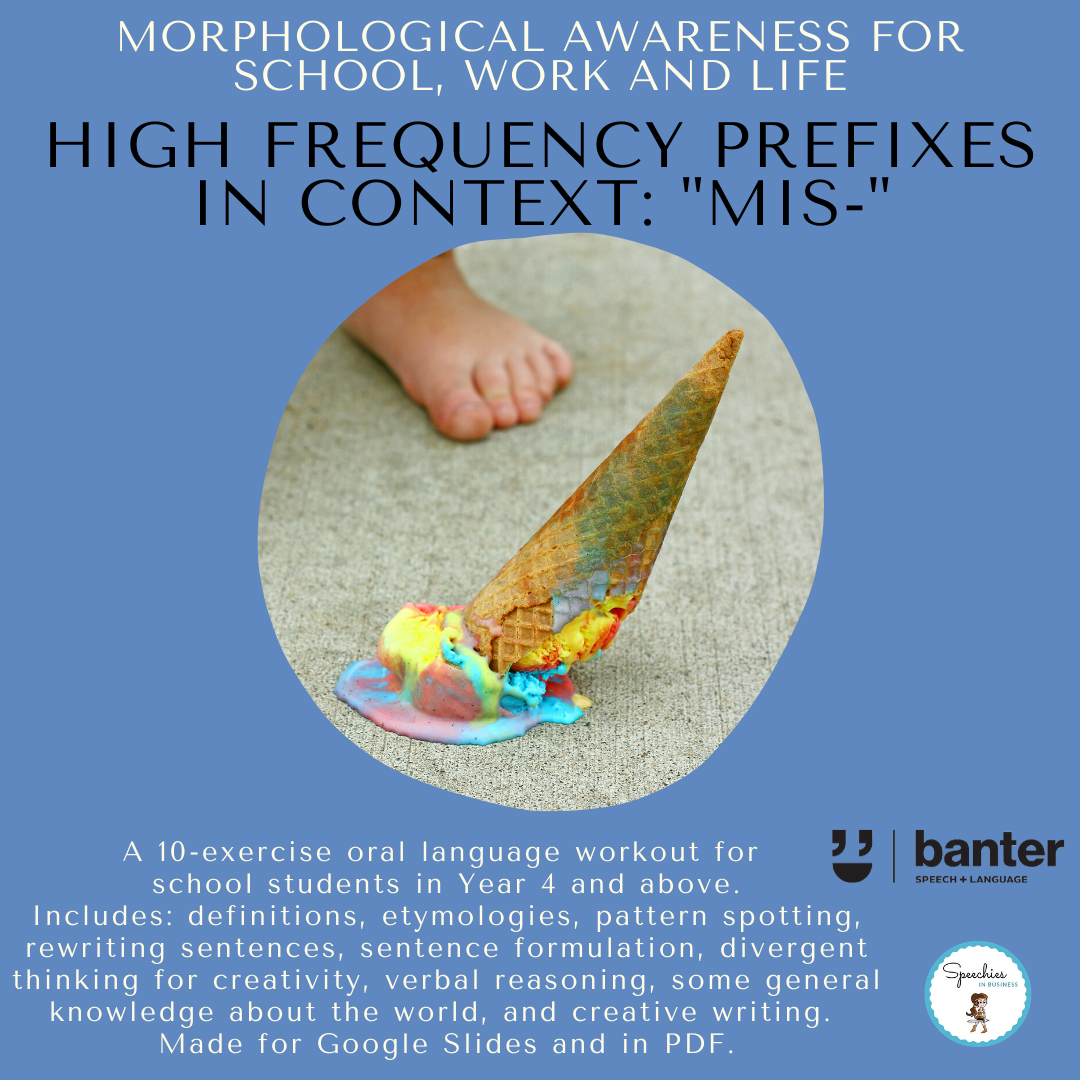
  • (R606) High Frequency Prefixes for Reading and Writing: “Mis-“

    In this 19-page resource, we teach students that the prefix “mis-” means “bad” or “wrong”.

    It contains 10 activities designed to teach and consolidate this knowledge. Activities include:

    • teaching the definition and etymology of the prefix, “mis-”, for comprehension and spelling;
    • a procedural word learning writing activity;
    • auditory bombardment – listening to “mis-” words in sentence context;
    • a highlighting activity: spotting the prefix in sentences;
    • a sentence rewriting exercise requiring students to replace words with a word using the “mis-” prefix;
    • a sentence formulation exercise with semantic constraints: making original sentences using words with an “mis-” prefix;
    • a divergent naming exercise: creative thinking using words with “mis-” prefixes;
    • a general knowledge investigation;
    • a verbal reasoning/persuasive writing exercise: generating pros and cons for arguments including “mis-” words; and
    • a story-making exercise with “mis-” words.

    This resource is one of nine modules covering the most frequent prefixes uses in English. Fully scripted, the module is is suitable for one-to-one, small group and whole class instruction; and can be downloaded in PDF and Google Slides format.

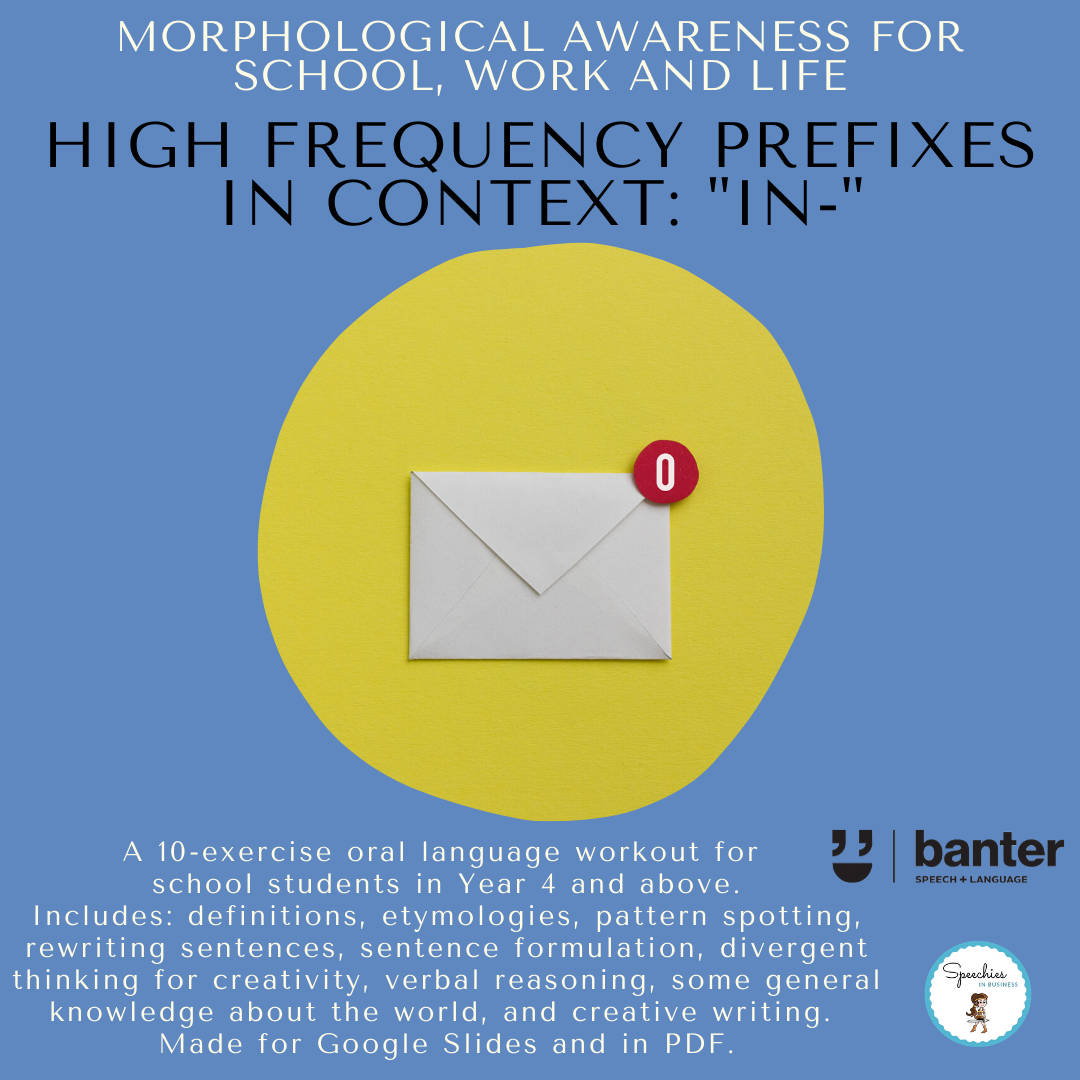
  • (R607) High Frequency Prefixes for Reading and Writing: “In-“

    In this 19-page resource, we teach students that the prefix “in-” means (1): “not”, “opposite of”, or “without”; or (2) “into”, “in”, “on” or “upon”.

    It contains 10 activities designed to teach and consolidate this knowledge. Activities include:

    • teaching the definition and etymology of the prefix, “in-”, for comprehension and spelling;
    • a procedural word learning writing activity;
    • auditory bombardment – listening to “in-” words in sentence context;
    • a highlighting activity: spotting the prefix in sentences;
    • a sentence rewriting exercise requiring students to replace words with a word using the “in-” prefix;
    • a sentence formulation exercise with semantic constraints: making original sentences using words with an “in-” prefix;
    • a divergent naming exercise: creative thinking using words with “in-” prefixes;
    • a general knowledge investigation;
    • a verbal reasoning/persuasive writing exercise: generating pros and cons for arguments including “in-” words; and
    • a story-making exercise with “in-” words.

    This resource is one of nine modules covering the most frequent prefixes uses in English. Fully scripted, the module is is suitable for one-to-one, small group and whole class instruction; and can be downloaded in PDF and Google Slides format.