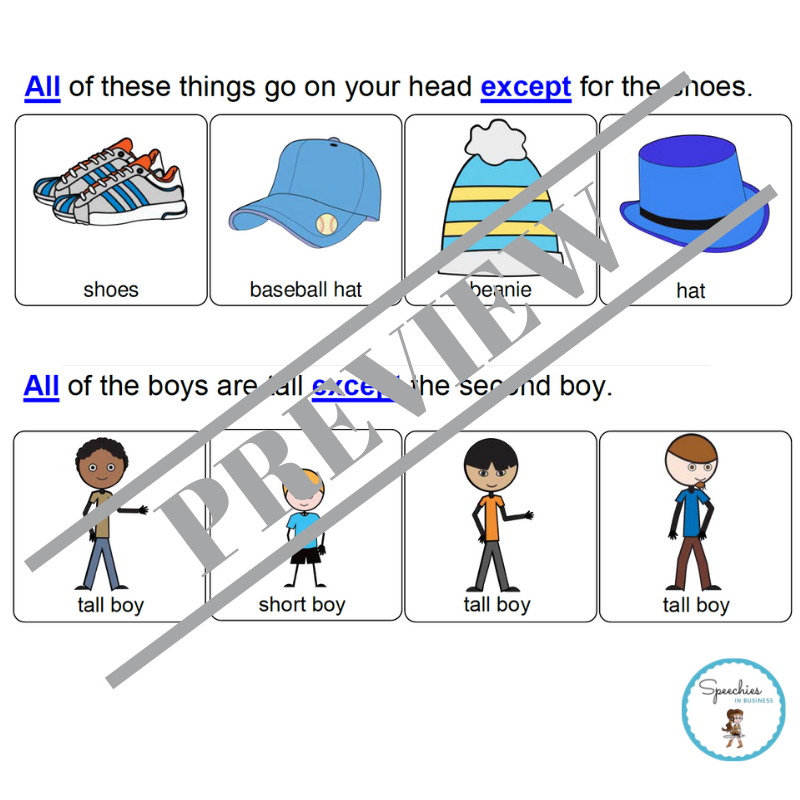
(L255) All…except Sentence Builders
$5.99 including GST
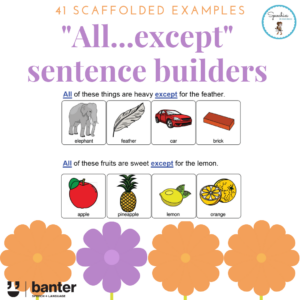
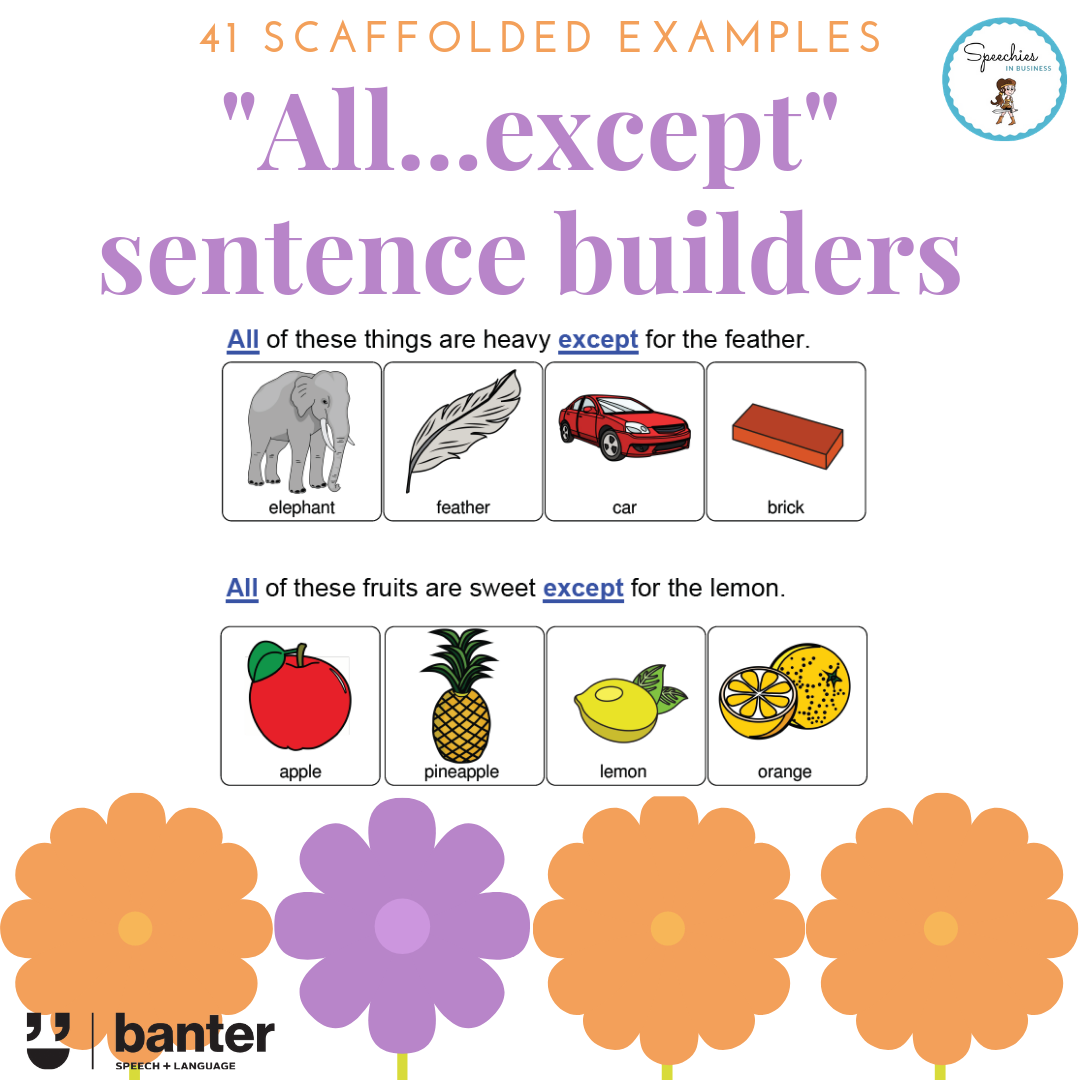
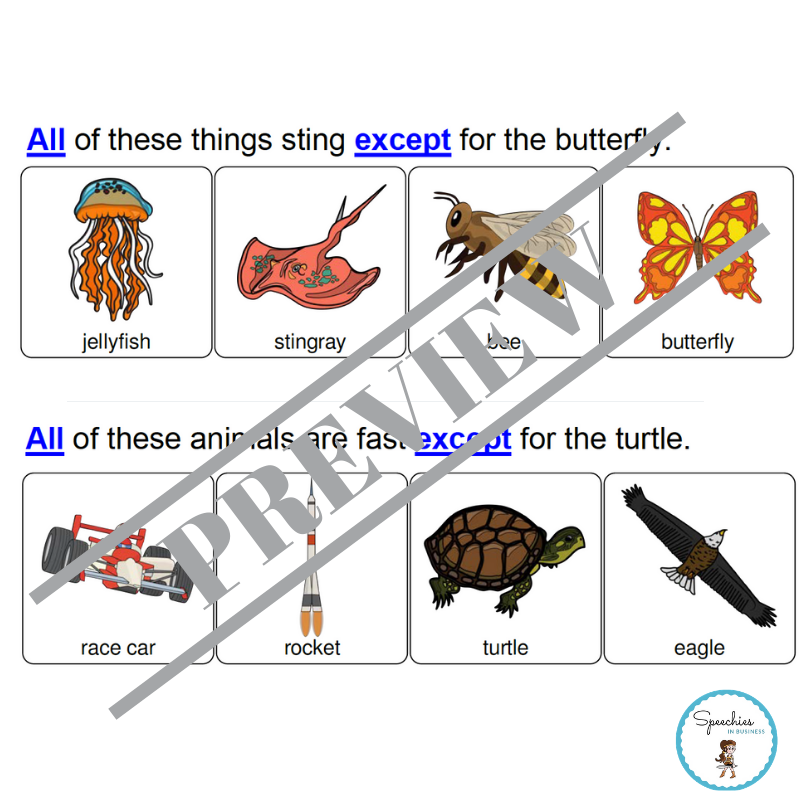
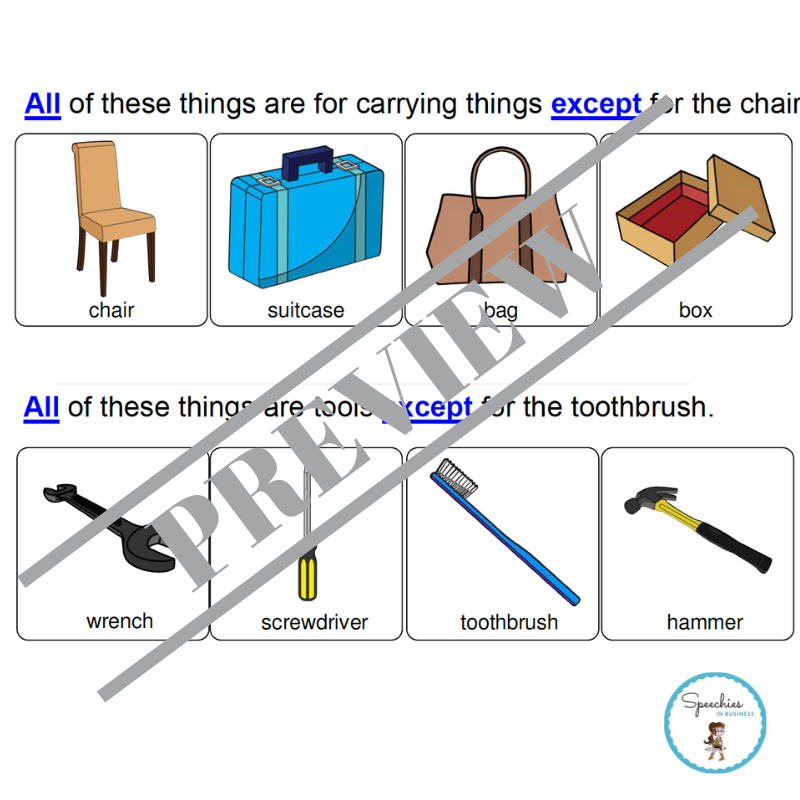
Featuring more than forty scaffolded examples with pictures and written words, this 24-page no-prep pack can be used to support people with a range of abilities and ages to master the “all…except” sentence form. As a bonus, we’ve used examples featuring several early developing categories to help stimulate language concepts and semantic language skills at the same time.
Description
“Except”, as a preposition, means “not including” or “other than”. It’s a very useful word, helping people to express in/out category relationships and exclusions. Among other things, it helps people to qualify their generalisations (“I don’t eat ice-cream, except on Sundays.”) and to express their thoughts and feelings, likes and dislikes, in more nuanced ways (“I don’t like ice-cream, except for vanilla scoops with chocolate topping.”). It can also support semantic language development and verbal reasoning skills (“All of these objects are tools found in the toolbox in the back shed, except for the mixer, which is an appliance found in the kitchen.”).
Typically developing children learn how to make all/except sentences before they turn 6 years old. But some people, including many people with language and learning disorders, some people with Autism Spectrum Disorders, and many people learning English as a second language have difficulties formulating “all….except” sentences. This no-prep resource is designed to help.
Featuring more than forty scaffolded examples with pictures and written words, this 24-page no-prep pack can be used to support people with a range of abilities and ages to master the “all…except” sentence form. As a bonus, we’ve used examples featuring several early developing categories to help stimulate language concepts and semantic language skills at the same time.
Once these sentences have been mastered, you can stimulate expressive language development further simply by asking the student to explain why the “exception” is different to the others. This is particularly useful for prompting use of subordinating conjunctions (e.g. “because”) and relative clauses (e.g. “All of these critters are insects, which have six legs, except for the spider, which has eight legs.”).

 (L264) The No Prep Grammar Builder: Uncontractible Copulas (“Who’s happy?” “She is!”)
 Carrier Phrases for Speech, Language, Stuttering and Voice Therapy
 (L263) Low-Prep Possessive ’s Story-Bootcamp Practice Pack
 (L126) Subject-Negative ('Don't')-Verb (SNegV Don't) Sentence Builders
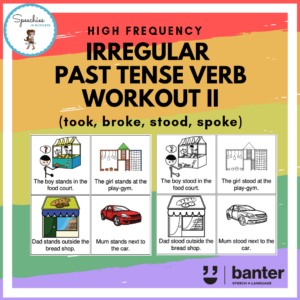 (L133) Verbs: Irregular Past Tense Verb Workout 2 (took, broke, stood, spoke)
 (L129) Subject-Verb-Complement (Auditory Bombardment)
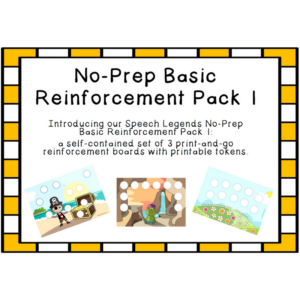 No-Prep Basic Reinforcement Pack I
 (L111) Subject-Verb (-ing) (Auditory bombardment)
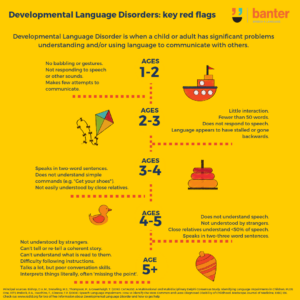 Developmental Language Disorder: Key Red Flags
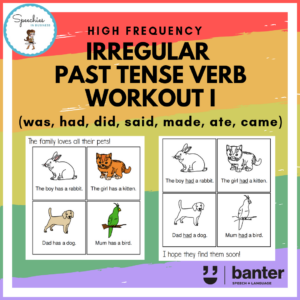 (L132) Verbs: Irregular past tense verb workout 1 (was, had, did, said, made, ate, came)
 (L121) Subject-Verb-Object (-ing) (Auditory Bombardment)
 (R513) High frequency words you need to get right when you write - Volume 1: The Six 'Wh' words
 (L419) Narrative Language Workout for Young Primary Schoolers: The Crow and the Pitcher, a Fable by Aesop
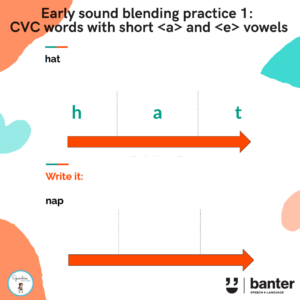 (R201) Early sound blending practice 1: CVC words with short a and e vowels
 (R509) Think, Then Write Workbook 2: FANBOYS Compound Sentences
 (L327) Relative Clause Sentence Workout Bundle: Who, That, Which
 (R708) Think, Then Write: Christmas Writing
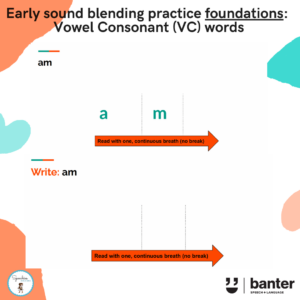 (R200) Early sound blending practice foundations: Vowel Consonant (VC) words
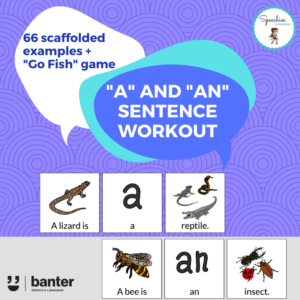 (L261) Sentence workout: indefinite articles “a” and “an” plus 'Go Fish' game
 (L125) Subject-Negative ('Can't')-Verb (SNegV Can't) Sentences
 (L420) Narrative Language Workout for Young Primary Schoolers: Mercury and the Woodman, a Fable by Aesop
 (R703) Think, Then Write Workbook 4: Paragraph Writing Foundations
 (L252) Sentence Maker: “Until” and “Unless”