


(R614) High Frequency Suffixes for Reading and Writing: “-our” or “-or”
$6.99 including GST
In this resource, we include some of the most common English words ending in the suffix -our or -or, as well as common academic words ending in -our or -or that are used across subjects at school.
The resource includes 10 activities designed to teach and consolidate this knowledge. See below for an outline of what is included in the resource.
Fully scripted, the module is is suitable for one-to-one, small group and whole class instruction; and can be downloaded in PDF and Google Slides format.
The activities in these resources are suitable for typically developing students in Year 4 and above. They are also suitable for gifted younger students, and older students with language, learning, reading and/or writing difficulties.
Description
To read well, students need to learn:
- alphabet decoding: including phonological awareness skills such as letter-sound links and how to blend speech sounds together to make words;
- fluent word reading: including gaining access to the meaning of words directly from the spelling without needing to decode them phonically, including through experience, morphological awareness and motivated reading; and
- text comprehension, including by increasing vocabulary, background knowledge, semantic networks, inference-making skills, higher level language skills, comprehension monitoring skills, sentence processing, and knowledge of text types, such as story grammar (Castles et al., 2018).
A growing body of research suggests we can help struggling readers with “morphological awareness training” (e.g. McLeod & Apel, 2015; Bowers et al., 2010). Morphological awareness is the skill of consciously thinking about and manipulating morphemes (McLeod & Apel, 2015).
Morphemes include:
- bases (e.g. “speak”); and
- add-on bits (aka affixes), including prefixes (e.g. “un-”) and suffixes (e.g. “-able”).
So, for example, the word “unspeakable” is made up of three morphemes: un-speak-able.
~~~~~~~~~~~~~~~~~~~~~~~~~~~~~~~~~~~~~~~~~~~~~~~~~~~~~~~~~~~~~~~~~~~~~~~
In this resource, we include some of the most common English words ending in the suffix -our or -or, as well as common academic words ending in -our or -or that are used across subjects at school.
It contains 10 activities designed to teach and consolidate this knowledge. Activities include:
- Definition and etymology of the suffix -our and -or, for comprehension and spelling.
- A “procedural learning” writing activity.
- Auditory bombardment: listening to -our or -or words in sentence context.
- Word highlighting activity: spotting the suffix in sentences.
- Rewriting exercise using -our or -or words to replace other phrases.
- Sentence formulation exercise with semantic constraints: making original sentences using -our or -or.
- Divergent naming exercise: creative thinking using words with -our or -or.
- Two verbal reasoning and persuasive writing exercises: generating pros and cons for -our or -or words.
- Story-making or creative writing exercise with -our or -or words.
Fully scripted, the module is is suitable for one-to-one, small group and whole class instruction; and can be downloaded in PDF and Google Slides format.
~~~~~~~~~~~~~~~~~~~~~~~~~~~~~~~~~~~~~~~~~~~~~~~~~~~~~~~~~~~~~~~~~~~~~~~~
The activities in these resources are suitable for typically developing students in Year 4 and above. They are also suitable for gifted younger students, and older students with language, learning, reading and/or writing difficulties.
For more evidence-based information about morphological awareness training, read our article “What else helps struggling readers: the evidence for morphological awareness training“.
Related resources:
- High Frequency Suffixes for Reading and Writing: “-able”
- High Frequency Suffixes for Reading and Writing: “-ion” and “-tion”
- High Frequency Suffixes for Reading and Writing: “-ship”
- High Frequency Suffixes for Reading and Writing: “-ible”
If you’re looking for resources about prefixes, see our fully-scripted teaching resources for the 9 most common prefixes in English here.

 (L111) Subject-Verb (-ing) (Auditory bombardment)
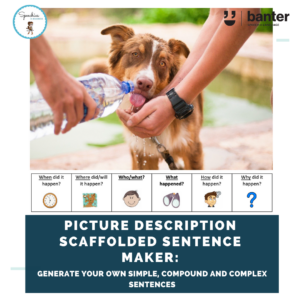 (L236) Picture Description Scaffolded Sentence Maker: generate your own simple, compound and complex sentences
 Carrier Phrases for Speech, Language, Stuttering and Voice Therapy
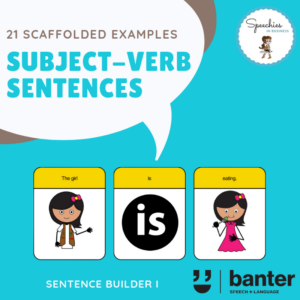 (L109) Subject-Verb (SV) Sentence Builders
 (E414) A /k/-initial aspiration trick story (for velar fronting and /k/ articulation)
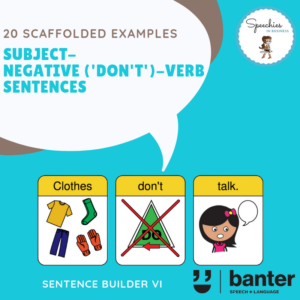 (L126) Subject-Negative ('Don't')-Verb (SNegV Don't) Sentence Builders
 (B210) Early polysyllabic words: a resource pack to support children with severe speech sound disorders
 (L242) Conjunctions - When (Auditory Bombardment)
 (L119) Subject-Verb-Object (SVO) Sentence Builders
 (R806) Think Then Write Workbook 5: Multi-Paragraph Information Report Writing Foundations
 (R414) The Zoo Druid
 (R417) The Frightening Shy Child
 (L267) Can I...? Questions (Auditory bombardment)
 (F514): Roger at the Ranch: A Palatal-Palatal Story
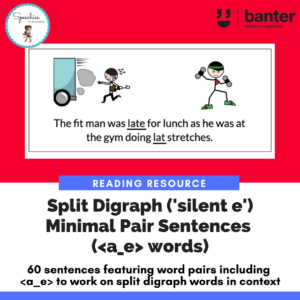 (R308) Reading Resource: Split Digraph ('silent e') Minimal Pair Sentences: a_e words
 (A108) Speech Sound Pack (Initial, Medial and Final) - /k/
 (F519) Advanced Speech Sound Exercises: Discourse Level Exercises - Alveolar Speech Sounds
 (C302) Complexity Approach: True Clusters with a Sonority Difference of 2 (/sm/ and /sn/)
 (C303) Complexity Approach: True Clusters with a Sonority Difference of 3 (/fl, sl, fr, shr and thr/)
 (C301) Complexity Approach: 3-sound clusters (/spl, str, skw, skr and spr/)
 (F513): Chief Shoshone and A Palatal Thriller: Palatal-Palatal Stories
 (R509) Think, Then Write Workbook 2: FANBOYS Compound Sentences
 (R413) The Scatter-Slayer Adventures: Book 1 – Don’t Stay! Be Afraid!
 Word Learner
 (R703) Think, Then Write Workbook 4: Paragraph Writing Foundations
 (E411) Slushy /s/ Zapper: A Lateral Lisp Treatment Resource
 (S111) Westmead Program for Children who Stutter: Introduction & Carrier Phrase Workout
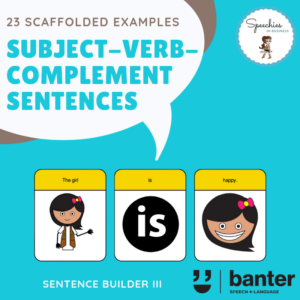 (L128) Subject-Verb-Complement (SVC) Sentence Builders
 Speech Therapy by Telehealth (Video Conferencing): Parent Guidelines
 (F516): Roger Saves the Day? A Palatal Mixed Movement Story
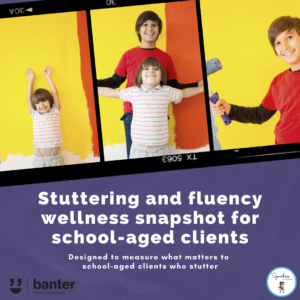 (S115) Stuttering and fluency wellness snapshot for school-aged children who stutter
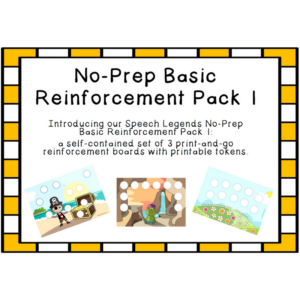 No-Prep Basic Reinforcement Pack I
 (S120) Speech Fluency & Naturalness Practice-Readings for Students who Stutter: Volume 1 (Nonsense Verses)
 (R305) Decoding Polysyllabic Words in Sentences: My Mother Is Impressive
