


(R615) Essential Language Convention Skills 3: How to Use Quotation Marks Properly
$6.99 including GST
In this 31-page Teach-Practice-Test resource, we do six things:
-
- Explain what quotation marks are (including alternative names like “inverted commas” and “quote marks”).
- Teach students how to use quotation marks, and where to place commas.
- Show students how yo use quotation marks for quotations and direct speech.
- Clarify the conventional use of single and double quotation marks in Australia, the UK and the United States.
- Explain how to punctuate quotations within quotations.
- Outline rules for placing commas, full stops, quotation marks, and for quoting longer passages and punctuating broken quotations.
It can be downloaded as a PDF or in Google Slides format. The slides can be used one-to-one, in small groups, and in whole class instruction.
Description
In this 31-page Teach-Practice-Test resource, we do six things:
-
- Explain what quotation marks are (including alternative names like “inverted commas” and “quote marks”).
- Teach students how to use quotation marks, and where to place commas.
- Show students how yo use quotation marks for quotations and direct speech.
- Clarify the conventional use of single and double quotation marks in Australia, the UK and the United States.
- Explain how to punctuate quotations within quotations.
- Outline rules for placing commas, full stops, quotation marks, and for quoting longer passages and punctuating broken quotations.
Written by Australian speech-language pathologists with a special interest in helping school-age students to thrive, this resource recognises that some students need extra help with their grammar and punctuation, including:
-
- some students with developmental language and other learning disorders;
- some students who are learning English as a second language;
- some students who might feel a bit worried about tests; and
- some students from low socio-economic or high risk backgrounds who may simply not have had much exposure to printed texts and punctuation conventions.
For each subtopic, we explain the convention, model the correct use, and provide practice exercises for students.
The materials do not require any prior knowledge, and are therefore suitable for people with limited technical knowledge of grammar and punctuation conventions.
We’ve worked hard to make this resource as accessible and inexpensive as possible. It can be downloaded as a PDF or in Google Slides format. The slides can be used one-to-one, in small groups, and in whole class instruction. We’ve also made separate packs for each key skill, so you only need to download what’s needed to help the student or students in question.
For more resources focused on language and punctuation conventions, check out our capital letter and full stop resource and our common and proper noun primer.

You may also like…
Related products
-
-
(R703) Think, Then Write Workbook 4: Paragraph Writing Foundations
$65.00 including GST -
-
 Speech Therapy by Telehealth (Video Conferencing): Parent Guidelines
 (L270) Verbs: Future Tense Verbs: Auxiliary Verb "going to" (e.g. "The girl is going to sing")
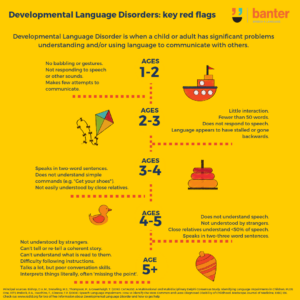 Developmental Language Disorder: Key Red Flags
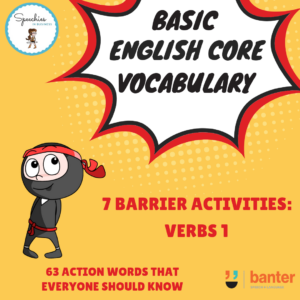 (L112) Barrier Activities - Basic English Core Vocabulary: Verbs 1
 (R214) CVCC Words in Sentences: Wendy has zest!
 No-Prep Basic Reinforcement Pack I
 Carrier Phrases for Speech, Language, Stuttering and Voice Therapy
 (R603) High Frequency Prefixes for Reading and Writing: "Dis-"
 Motor-speech stories for articulation movements pack 3: alveolar-alveolar and velar-velar
 (S115) Stuttering and fluency wellness snapshot for school-aged children who stutter
 (F508) Zack the Zookeeper: An Alveolar-Velar Story
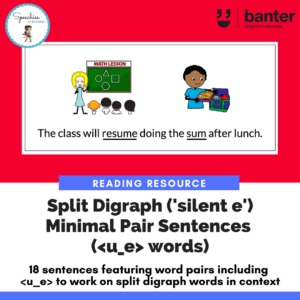
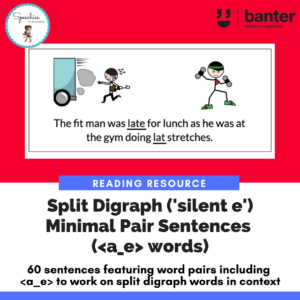 (R308) Reading Resource: Split Digraph ('silent e') Minimal Pair Sentences: a_e words
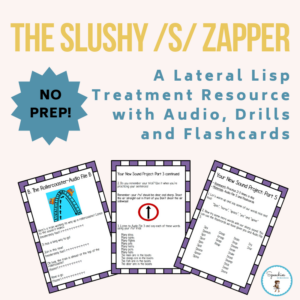 (E411) Slushy /s/ Zapper: A Lateral Lisp Treatment Resource
 Complex Cluster Targets for use with a Cycles Approach, Complexity Approach or Contrastive Approach

Reviews
There are no reviews yet.