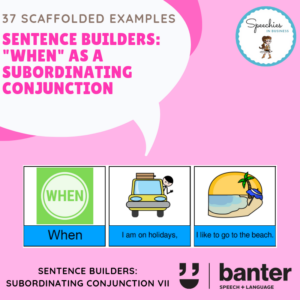


(L240) Sentence builders: “When” as a subordinating conjunction
$5.99 including GST
Some people – including people learning English as a second language, and people with developmental language disorders – have difficulty understanding and using “when” in complex sentences. This 22-page pack is designed to help them, with scaffolded examples using both pictures and words to support people with a range of different needs to learn the word in sentences.
Description
At around the age of 48-60 months, typically developing children start to understand and to say sentences using the word “when” as a subordinating conjunction. “When” means “at or during the time that” or “after which; and just then”. Used as a subordinating conjunction, “when” helps link ideas by reference to time.
Some people – including people learning English as a second language, and people with developmental language disorders – have difficulty understanding and using “when” in complex sentences. This 22-page pack is designed to help them, with scaffolded examples using both pictures and words to support people with a range of different needs to learn the word in sentences.


 (D405) Stopping Pack
 (S125) Speech Fluency & Naturalness Practice-Readings for Students and Adults who Stutter: Volume 6 (Famous Essays)
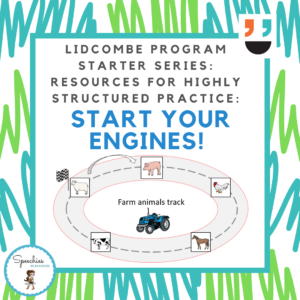 (S108) Lidcombe Program Starter Series: Resources for Highly Structured Practice: Start Your Engines!
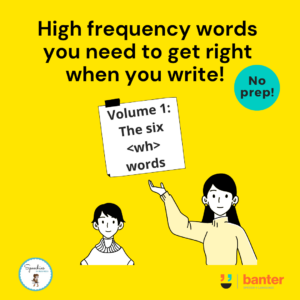 (R513) High frequency words you need to get right when you write - Volume 1: The Six 'Wh' words
 (S128) Speech Fluency & Naturalness Practice for Students and Adults who Stutter: Volume 7 (Impromptu Speaking Discussion Topics)
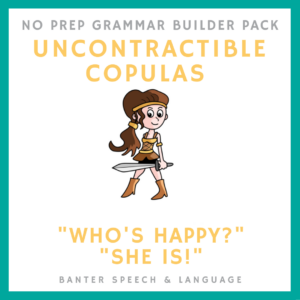 (L264) The No Prep Grammar Builder: Uncontractible Copulas (“Who’s happy?” “She is!”)
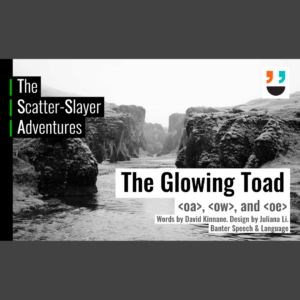 (R416) The Glowing Toad
 (R614) High Frequency Suffixes for Reading and Writing: "-our" or "-or"
 (R509) Think, Then Write Workbook 2: FANBOYS Compound Sentences
 (R422) The Spoiled Boy
 (S114) Stuttering Superhero Cards
 (R810) Book Hacker: How to read a book to understand it quickly
 (S121) Speech Fluency & Naturalness Practice-Readings for Students who Stutter: Volume 2 (Short Poems)
 (R703) Think, Then Write Workbook 4: Paragraph Writing Foundations
 (R414) The Zoo Druid
 (R304) Decoding Polysyllabic Words in Sentences: My Dad Does Several Silly Things
 (R209) CCVC Words in Sentences: Is Stan a Brat?
 (L267) Can I...? Questions (Auditory bombardment)
 (B209) Cycles Approach: /r/ initial Pack
 (B206) Cycles Approach: Velars Pack (/k/ initial and final, /g/ initial)